

Senior Partner
When people call 911 because someone is in imminent threat of serious harm, prompt response by law enforcement or emergency response personnel is essential. If help is delayed because a 911 operator misclassifies a call as a low priority, the 911 agency can be held responsible for a resulting death or injury.
Estate of Amber Keith v. Valley Communications Center
Recently, the Washington Court of Appeals decided the case of the Estate of Amber Keith v. Valley Communications Center. Amber Keith was in room 214 at the Ramada Inn in Kent. A housekeeper cleaning an adjacent room heard sounds of a violent struggle and reported it to the hotel security officer.
The security officer went to the room and listened at the door. He heard screaming and things breaking. He heard a female say, “stop choking me,” “stop pushing me,” and “leave me alone.” After a few minutes, the security officer called a nonemergency police number and was connected to a 911 operator.
The security officer told the 911 operator that it sounded like someone was being murdered in the hotel room and asked them to send help “ASAP” because “somebody’s getting murdered over here.” The 911 operator said they were dispatching help and would get there as quickly as they could. Instead, the 911 operator placed the call on “hold” status as a low priority.
Twenty minutes later, the security officer called the nonemergency number again but was unable to connect.
Thirty minutes after the initial call, the security officer called the nonemergency number a third time and reported that there was a domestic violence incident occurring and that it was very bad.
Forty-five minutes after the initial 911 call, the man who had been in the hotel room with Amber Keith called 911 and stated that he needed an ambulance because his fiancé had overdosed on drugs and was not breathing. In fact, he had murdered her. Within minutes, emergency personnel and officers arrived, and the man was arrested.
Amber Keith’s family sued the 911 agency for putting the call on “hold” status rather than responding to it with the urgency the situation required. The trial court judge dismissed the claim, but the Court of Appeals reversed the trial court and held that Ms. Keith’s family had asserted a potentially valid claim.
A Landmark Washington Case on 911 Liability
Stritmatter Law attorneys handled one of the leading cases involving 911 agency liability, Munich v. Skagit Emergency Communication Center, 175 Wn.2d 871 (2012). In that case, Bill Munich, a 63-year old man, was fatally shot on the side of a road waiting for law enforcement to arrive. He had called 911 after a neighbor standing at the fence line pointed a gun in his direction and fired. He told the 911 operator that he had gone into a garage on the property to get away from the neighbor and did not know where the neighbor was.

The 911 operator misclassified the call in the computer dispatch system, which resulted in law enforcement being dispatched at a low priority response. The 911 operator told him that an officer was on the way.
About seven minutes after the first 911 call, Bill Munich called 911 again and said that he was on Highway 20, running away from his neighbor, who was shooting at him. He told the operator that he fled on foot after his neighbor came into his garage. He said his neighbor chased him down in a car and was firing a shotgun out the window. Mr. Munich was fatally shot 14 ½ minutes after a deputy was dispatched to respond.
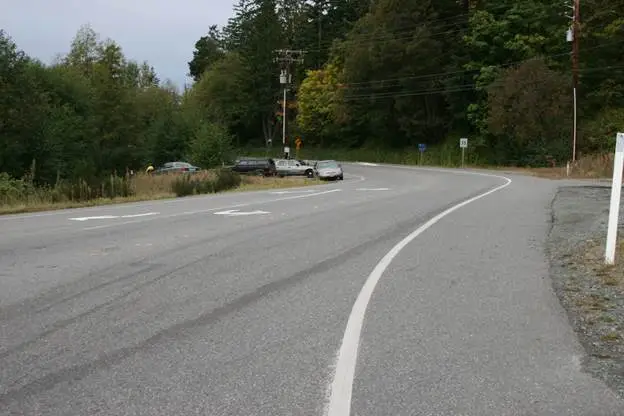
Expert witnesses testified that if the call had been coded properly as a Priority One, law enforcement would have arrived in time to prevent the fatal shooting.
As these cases illustrate, when 911 agencies fail to classify and respond to emergency calls properly, fatal consequences predictably result.
Claims against 911 agencies for negligence in responding to 911 calls involve complex legal issues under the “public duty doctrine” and require intensive factual investigation. The attorneys at Stritmatter Law are experienced in handling cases involving negligence by 911 agencies and are available for consultation if you or a family member has been injured as a result of a 911 agency’s negligence in responding to an emergency call.