
Senior Partner
Seattle City Councilmember Rob Saka, chair of the STEPS Committee (Safety, Transportation, Engineering Project, Sports & Experiences), recently called for an independent audit of Seattle’s traffic safety practices to determine if the City is taking effective measures to improve safety and avoid pedestrian accidents. The purpose of the STEPS Committee is to strengthen traffic safety, modernize transportation policy, and oversee major civic and sporting events.
Traffic Deaths and Injuries in Seattle
The Seattle Department of Transportation (SDOT) recently made a presentation to update the STEPS Committee on Seattle’s Vision Zero Program, which has a goal of ending traffic deaths and serious injuries on city streets by 2030. The City launched its Vision Zero effort in 2015. Since then, over 2,101 people have been seriously injured and 284 people have lost their lives in traffic crashes in Seattle. According to data presented by SDOT, injuries and deaths as a result of collisions on city streets have been on an upward trajectory since 2015.
In 2025, 219 people were seriously injured on city streets, and 27 people died as a result of traffic collisions. 18 of the people who died were pedestrians, and about a third of those seriously injured were pedestrians.
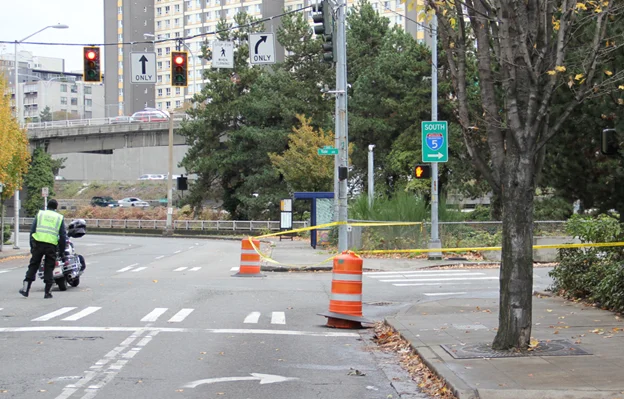
Vision Zero is based on a Safe System Approach, which considers several factors contributing to the outcomes of traffic crashes – roads, driver behavior, vehicle safety features, vehicle speeds, and post-crash medical care. The program identifies locations with significant collision histories and identifies safety countermeasures to implement in response to the types of collisions that have occurred, as well as trying to proactively implement safety countermeasures before safety problems result in a history of collisions.
Audit of Seattle’s Safety Practices to Avoid Pedestrian Accidents
Measures that have been implemented as part of Vision Zero for pedestrian safety include pedestrian-activated signals at crossings, giving pedestrians a head-start on walk signals, traffic calming measures (such as speed humps and narrowing streets at pedestrian crossings), and prohibiting turns on red lights.
Rainier Avenue, Aurora Avenue, Martin Luther King Jr. Way, Lake City Way, and Fourth Ave. South continue to be identified by SDOT as problem roads with “high injury” corridors that are in need of more significant changes to improve traffic safety.
The purpose of the audit is to evaluate what safety measures are working to reduce injuries and deaths and which are not. Three years ago, SDOT did an internal review of its traffic safety practices. Councilmember Saka requested that an independent audit be performed to evaluate the effectiveness of traffic safety measures that have been used and make recommendations for improvements.
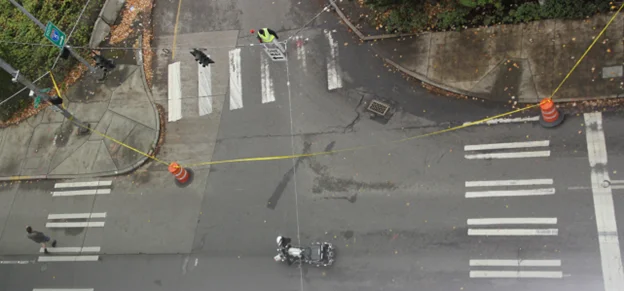
Governmental entities have a legal duty to design and maintain roads in reasonably safe condition under Washington law. Road design and maintenance cases involve complex engineering and legal issues. If you or a loved one have been injured because of a dangerous road condition, call Stritmatter Law for a free consultation with one of our experienced road design and maintenance lawyers.