

Senior Partner
If you were injured by a product purchased on Amazon, there’s a good chance something on the product packaging says “Made in China.” There’s also a good chance the Amazon “selling partner” that listed the product is not the actual manufacturer. The product brand also may not be the actual manufacturer. This tangled web of international commerce can be difficult to decipher, but you do have recourse.
I was injured by a product made in China—what do I do?
The first step is to determine as best you can what companies were involved in the manufacture, distribution, and sale of the product. If you purchased the product on Amazon, the “Sold by” company listing indicates the “selling partner” or “third-party seller” responsible for the product listing on Amazon. That entity may be the same as the brand name, the manufacturer, or just another party responsible for selling the product.
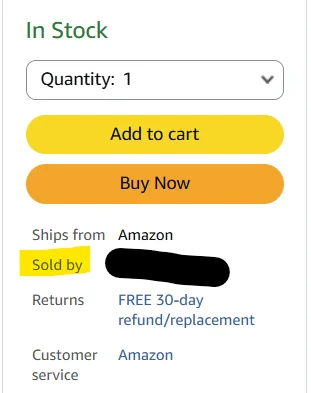
To dig deeper, it may help to look at the seller page or “storefront” on the Amazon store. If the “selling partner” has an independent website, that may also give clues about their role in the transaction and their U.S. market, which is important later on.
Google or other AI research may also help identify the true “manufacturer” behind brand names even when they are not prominently listed on public-facing websites. Chinese companies may own patents or trademarks in the United States or may have sought approval from U.S. agencies for their product. For example, wireless charging devices are required to be approved by the FCC.
Once you have the names of the Chinese manufacturers or other companies, you can search them on sites like Qichacha. From there, you can learn generally what type of business they conduct and where they are based. You will eventually need help from an expert to learn more, but this type of research is a good starting point.
Can I sue a Chinese company in a U.S. court for a product I got on Amazon?
The short answer is Yes. But that doesn’t mean you will recover anything from them. There are several hurdles in the way.
The first hurdle in suing a foreign manufacturer is achieving valid “service of process.” That means serving the company with the summons and complaint that initiated the lawsuit.
Serving individuals and companies in the U.S. is straightforward. You deliver the documents to the person or company and that’s it. Serving foreign companies is much more difficult.
If the foreign company is based in a country that signed on to the Hague Convention regarding service of process, you can use the Hague Convention procedure, which involves translating documents and serving the “central authority.” The process is expensive and can take months—sometimes even a year—to complete. Service may be rejected or the company may evade service.
The second hurdle in suing a foreign manufacturer is whether the court has “personal jurisdiction” over the company. If the company’s conduct caused your injuries, the court will have jurisdiction over the company if it is constitutionally fair to do so.
Washington courts have recognized the lack of clarity over what that means: “[T]he subject of specific jurisdiction is not well-settled law. Decisions from the highest courts in the land contain significant disagreement as to how courts should test evidence of personal jurisdiction.” Noll v. Special Electric Company, Inc., 9 Wn. App. 2d 317, 323 (2019). This issue depends on the foreign company’s connection with the state and whether the foreign company should reasonably anticipate being hailed to court there.
The third hurdle is that even if you can serve and get jurisdiction over the foreign company, there’s no guarantee they will ever show up in court. If the company is small and undercapitalized, there is little consequence to them by ignoring a U.S. court. It can change into a new company and move on.
What options do I have if I’ve been injured by a product I bought on Amazon?
In many states, people injured by defective products can bring claims against the retailers or “sellers” of the product, particularly when there is no way to obtain relief from a foreign manufacturer. In Washington, where Amazon is based, you can recover from a product seller primarily for the seller’s own negligence or when “it is highly probable that the claimant would be unable to enforce a judgment against any manufacturer.” RCW 7.72.040(2)(b).
For example, a retailer that negligently misrepresents product information is liable for its conduct. You can learn more about negligence claims against Amazon here and here. Likewise, if you cannot serve, get jurisdiction over, or otherwise recover from the product manufacturer, especially one in another country, retailers are responsible.
How and where should I bring a lawsuit over a foreign product I bought on Amazon?
Claims against Amazon can and often should be filed in Washington State, where Amazon is based. Amazon’s “selling partners” that list the products are also likely subject to Washington jurisdiction because they sell through a Washington company and agree to Amazon’s terms to apply Washington law in Washington courts.
Washington law and Seattle-area venues also may be more favorable than other states around the country. Learn more about these issues here.
Stritmatter Law specializes in products liability cases involving Amazon products and regularly navigates these complex global commerce issues. The firm is regularly retained by injured victims and other lawyers around the country for our expertise and track record pursuing claims against Amazon. Senior Partner Andrew Ackley has been published and presented multiple times on Amazon’s liability for dangerous products.
If you or a loved one has been injured or killed by a product manufactured in China or elsewhere, contact us for a free consultation.