

Senior Partner
Pavement edge drop offs are a well-recognized hazard for motorists. In addition to causing drivers to lose control and crash in single-vehicle crashes, drivers who encounter pavement edge drop offs sometimes also cross into the oncoming lane of travel and cause head-on collisions as a result of steering sharply to the left to try to get back on the roadway.
Road safety standards for shoulders and edge of pavement
The Federal Highway Administration published Safety Impacts of Pavement Edge Drop-offs in 2006. The report states: “When a vehicle leaves the travel lane, pavement edge drop-off poses a potential safety hazard because significant vertical differences between surfaces can affect vehicle stability and reduce a driver’s ability to handle the vehicle.”
Examples of pavement edge drop off cases handled by Stritmatter Law
Stritmatter Law has handled numerous cases involving pavement edge drop offs. These are two examples.
State Route 530
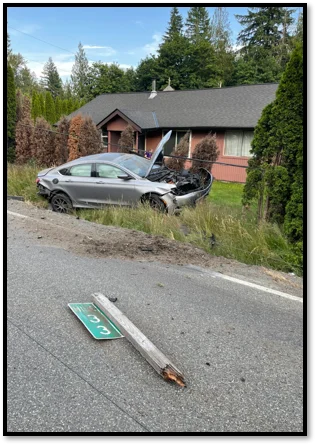
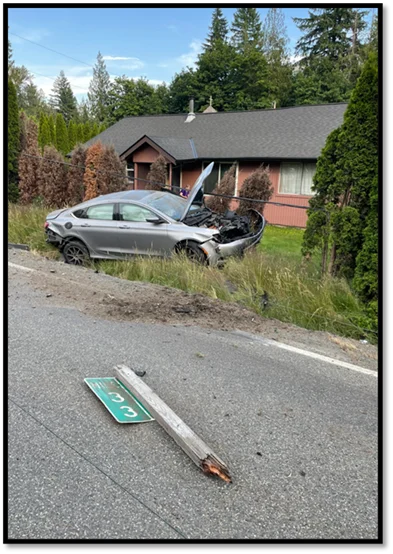
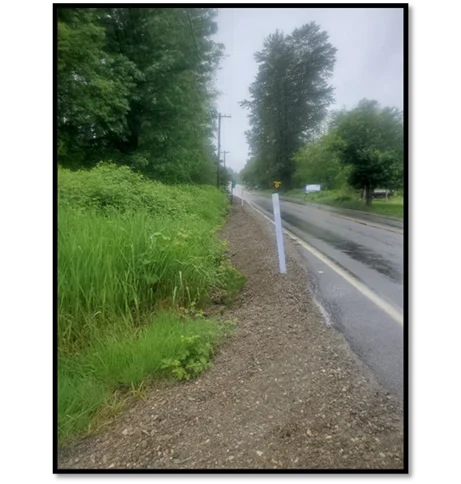
In June 2023, David was driving home from work on SR 530 in Arlington. His right tire went just beyond the white fog line and encountered a seven-inch pavement edge drop off. His right tires were trapped by the pavement edge wall. He could not get his car back onto the pavement. Moments later, his car hit a driveway culvert, causing it to flip end over end, finally striking a utility pole.
His car came to rest in a nearby yard, after hitting a row of trees the homeowners had planted to protect against vehicles crashing into their home. According to the homeowners, this was the 18th time since they bought the home in 1975 that the same type of crash had occurred due to a vehicle being caught in the ditch after encountering the pavement edge drop off.
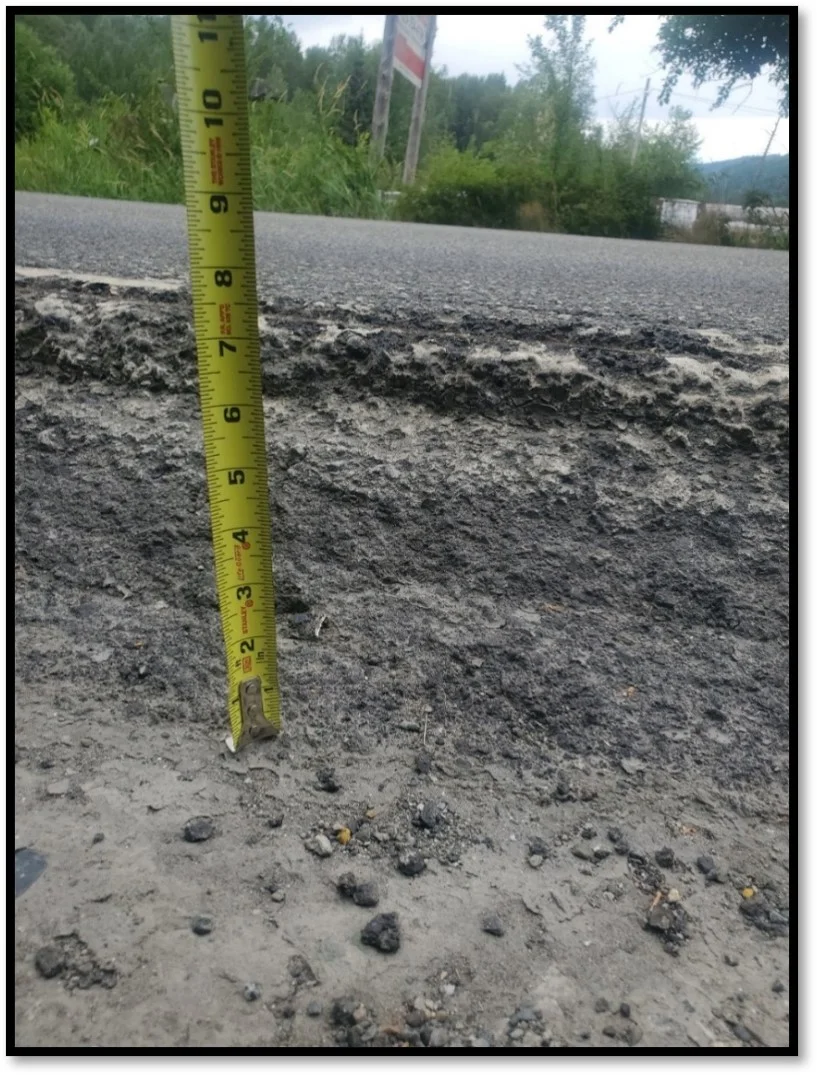
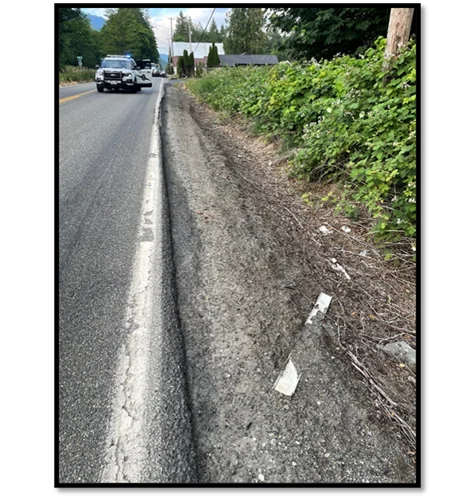
After another crash at the same location a few months later, WSDOT filled the area with gravel and installed delineators.
State Route 14
Approximately 200 feet up an on-ramp to SR 14, the asphalt pavement edge was seriously deteriorated, consisting of a sharp pavement edge drop-off more than six inches deep.
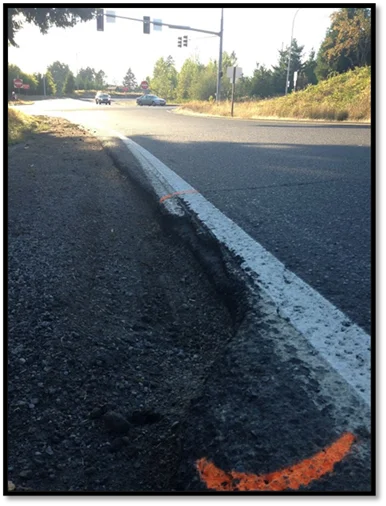
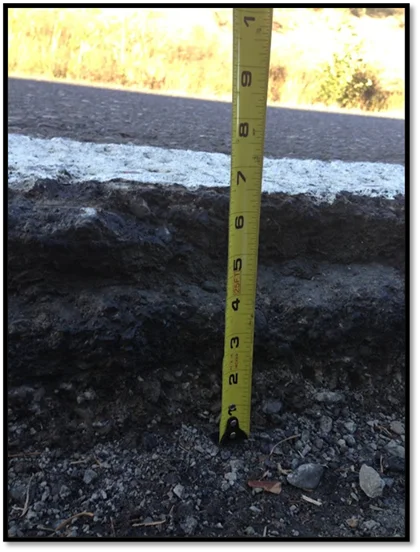
Although WSDOT performed work along that on-ramp over the years, including striping the on-ramp, it took no steps to repair the deteriorated asphalt edge. According to design plans, the road should have been built with a paved eight-foot shoulder.
In September 2013, Todd was operating a motorcycle in Vancouver, Washington, accompanied by two other motorcyclists. While stopped at a red light at the 164th/SR 14 on-ramp intersection, he observed that one of the motorcyclists was far behind, and decided to turn onto the on-ramp and pull over onto the shoulder to wait for his friend to catch up.
As he slowed to pull onto the shoulder, the front wheel of his motorcycle suddenly dropped into a deep hole at the pavement edge and struck the far edge of the hole, causing the front of the motorcycle to lift up and become airborne, followed by the rear tire then striking the far edge of the hole and raising the rear of the motorcycle. This pitched the front of the motorcycle downward, throwing his body into a guardrail where he sustained multiple internal and orthopedic injuries.
Is the government liable for a crash caused by a pavement edge drop off?
Under Washington law, governmental entities have a duty to provide the traveling public with reasonably safe roads. This duty extends to the full width of the roadway, including the shoulder. See Wuthrich v. King County, 185 Wn.2d 19 (2016) (duty to provide reasonably safe road includes removing hazard (sight-obstructing vegetation) from adjacent shoulder area); Lowman v. Wilbur, 178 Wn.2d 165 (2013) (municipality subject to liability for crash involving utility pole located 4.47 feet from roadway edge). A deep pavement edge drop-off and non-traversable ditch is a hazardous road condition.
Claims for unsafe road maintenance require careful review of road conditions, crash dynamics, and road safety standards. They require consultation with expert witnesses in multiple fields. Stritmatter Law’s attorneys are experienced in handling all types of road design and maintenance cases in the State of Washington and available for a free consultation.