

Partner
The Wall Street Journal recently reported that the FAA two of the air traffic controllers left work early at LaGuardia airport the day last March that Air Canada Flight 8646 crashed into a New York Port Authority fire truck on the runway. The runway crash killed the two pilots, ejected a flight attendant onto the ground while still strapped in her seat, and badly injured 39 passengers, two of whom are our clients. This discovery that the ATC controllers were not on the job exposes a serious systemic flaw in the U.S. aviation safety system that must be fixed immediately.
Overworked ATC Controller
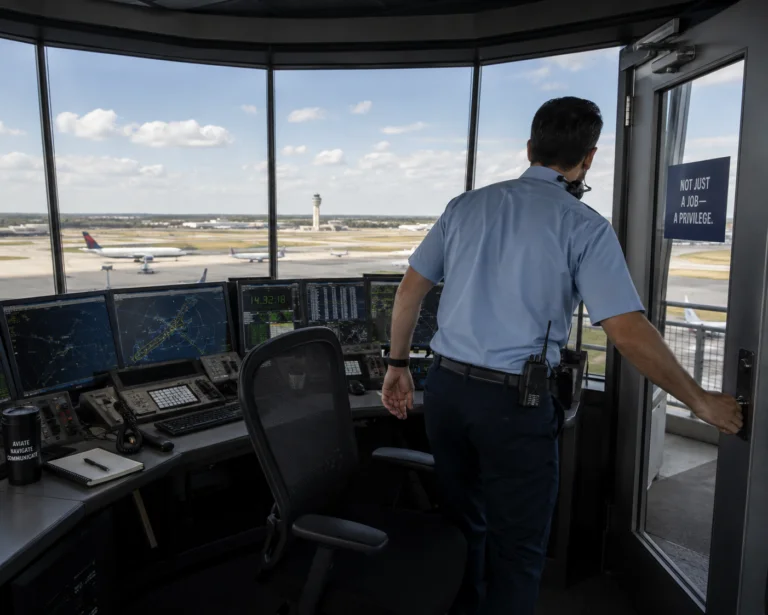
Conditions in the air and on the tarmac are ever changing, as are flight plans, requiring constant focus and attention by all involved in controlling the traffic above and below. Mistakes can be deadly. In the Air Canada incident at LaGuardia, one of the two on-duty controllers left behind was forced to juggle two conditions simultaneously. In his own words, he “messed up.” He mismanaged the airplane traffic in the air and tarmac traffic on the ground, causing the landing aircraft and fire truck to crash into each other. The two ATC controllers had no backup in what is one of the most complex aviation environments in the world. This is troubling news that, of course, demands further investigation.
“Early Shove”: A Known Chronic ATC Understaffing Problem
More troubling, apparently this practice of air traffic controllers leaving work early has been a well-known, chronic problem for years. It even has a nick-name: “Early Shove”. The FAA regards it as timecard fraud and is moving to fire the two LaGuardia ATC controllers; as it reportedly has with over ten others. Perhaps this will “send a message”; but what will the FAA do to actually fix the conditions contributing to this subset of what many see as a wide-ranging broken aviation safety culture? It stems from putting people doing a very stressful, detail-oriented job with insufficient relief. The lack of relief comes from a lack of workers to relieve them. “Early shove” has long been seen among the ATC controller community as a form of “earned” psychological relief after an especially busy stretch on duty. Nobody wants overworked, overstressed air traffic controllers. But having them on the job seems better than the alternative.
More Air Traffic Controllers Needed
The FAA claims to be training 4,000 new controllers to supplement the 11,000 currently available and do a better job to keep our airliners from crashing. That is good news so long as the new ones are sufficient to replace those who we lose. The training to become a certified air traffic controller is intense and takes years, competency in complex situations demands more years of experience, and aging into retirement is a constant drain on the controller population.
Safey Must Be First
There are no traffic lights in the sky or on the runways. We rely on people in control towers to direct our fates. It is, to be sure, a difficult and stressful job at times. They deserve relief, but it cannot become a habitual entitlement at the expense of our aviation safety. Those who staff the tower deservedly face liability when people die or are injured due to avoidable mistakes. Unless and until the ATC staffing is improved, those of us who choose to fly have little choice but to encourage responsibility by demanding accountability from our government.
Air Traffic Controller Liability: The Consequence of FAA Failure To Fix Itself
If FAA cannot fix the situation, resulting injuries and death caused by air traffic control negligence will remain insufficiently checked, and the federal government will continue to pay air crash victims with our tax dollars for the damage it causes.