
On June 15, 2026, KREM 2 news in Spokane reported that a 21-year-old employee at the Goodwill Outlet Store in Airway Heights had both hands severed in a piece of machinery while at work. He was life-flighted to Harborview Medical Center in Seattle, where doctors were able to reattach his right hand — but his left hand could not be saved. His mother described the moment she saw her son as “heart-wrenching.”
Cases like this raise urgent questions. When a worker suffers a catastrophic, life-altering injury on the job, what legal remedies are available? The answer in Washington State is more complicated — and more limited — than most people expect.
Workers’ Compensation: The Default Rule
Washington’s Industrial Insurance Act (IIA), codified at Title 51 of the Revised Code of Washington, is the starting point for any workplace injury claim in this state. Under the IIA, injured workers are generally entitled to workers’ compensation benefits — covering medical treatment, partial wage replacement, and disability — regardless of who was at fault. Because they are compensated through the Department of Labor and Industries, Washington workers cannot bring negligence lawsuits against their employers and co-workers. This is known as employer “immunity.” In many workplace injuries, the employer or a co-employee is at fault and no lawsuit can be brought. The IIA expressly abolished all civil actions for workplace injuries, replacing them with the workers’ compensation system.
For the young man who was working at Goodwill, this means he is almost certainly entitled to workers’ compensation benefits from the Department of Labor and Industries. Those benefits will cover his medical care and a portion of his lost wages. But they will not come close to compensating him for the devastating impact of this injury on his life.
Can an Injured Worker Sue Their Employer?
In most cases, no. The IIA’s exclusive remedy provision shields employers from civil lawsuits brought by their own injured workers. However, Washington law does create a narrow exception: under RCW § 51.24.020, a worker may bring a civil lawsuit against their employer if the injury resulted from the employer’s deliberate intention to cause that injury.
The Washington Supreme Court, in Birklid v. Boeing Co., set a high bar for this exception. The employer must have had (1) actual knowledge that injury was certain to occur, and (2) willfully disregarded that knowledge. Birklid v. Boeing Co., 127 Wn.2d 853, 865 (1995).
This is not mere negligence, or even gross negligence — Washington courts have been unambiguous that an employer’s failure to follow safety procedures, no matter how egregious, does not meet this standard unless the employer had knowledge that the injury was certain to occur.
The key questions would include: Did the employer have documented knowledge that this specific machinery was certain to cause serious injury? Were there prior incidents involving this same equipment? Was a known safety guard removed or disabled? Without that kind of direct, documented evidence of deliberate disregard for certain injury, a civil claim against an employer faces significant legal obstacles under Washington law.
Third-Party Claims: Suing the Machinery Manufacturer
Here is where the legal picture becomes significantly more promising. The IIA’s exclusive remedy bar applies only to the employer — it does not protect other parties whose negligence or defective products contributed to the injury.
The law recognizes that there can be more than one cause of an incident. While an employer’s negligence may contribute to causing an incident, if the fault of a third party also caused an incident, there can still be third party liability. There is no third-party liability if the employer’s negligence was the sole cause of an incident.
For example, if the machinery that severed the young man’s hands was defective in its design, the manufacturer of that equipment may be fully liable in civil court.
Washington’s Product Liability Act provides several avenues for recovery against a machinery manufacturer:
Design Defect. Under RCW § 7.72.030(1)(a), a manufacturer is liable if the machinery was not reasonably safe as designed — meaning the risk of serious injury outweighed the burden of implementing a safer, practical design. Industrial machinery that can sever both of a worker’s hands raises serious questions about whether adequate guarding, emergency stops, or other industry-standard safety features were incorporated into the design.
Failure to Warn. Under RCW § 7.72.030(1)(b), a manufacturer is liable if it failed to provide adequate warnings about the dangers of the machinery. Given the catastrophic nature of this injury, the adequacy of any warnings about pinch points, rotating parts, and the risk of amputation would be a central issue.
Manufacturing Defect. Under RCW § 7.72.030(2)(a), if the specific machinery unit involved in this accident deviated from the manufacturer’s own design specifications — for example, if a safety guard was missing from this unit but present on others — the manufacturer faces strict liability.
Post-Sale Duty to Warn. Under RCW § 7.72.030(1)(c), if the manufacturer later learned, or should have learned, about a danger connected with the machinery and failed to issue updated warnings or safety bulletins, liability may exist.
Breach of Implied Warranty. Under RCW § 62A.2-314, industrial machinery carries an implied warranty that it is fit for ordinary use. Machinery that severs an operator’s hands during ordinary operation may not be fit for its specific purpose and constitute a breach of this warranty.
A successful products liability claim against the machinery manufacturer is not limited to workers’ compensation-style benefits. The injured worker at Goodwill could potentially recover for the full value of his lost hand, permanent disability, pain and suffering, lost future earnings, and other damages — the kinds of losses that workers’ compensation simply does not address.
What Happens Next
Investigations into this accident are ongoing. Goodwill has stated only that it is “conducting a thorough review to determine the contributing factors.” Washington’s Department of Labor and Industries or the Occupational Safety and Health Administration (OSHA) will likely investigate the incident as well.
For the Goodwill employee and his family, the immediate priorities are his medical recovery and ensuring his workers’ compensation claim is filed correctly and completely. But the long-term legal picture — including whether a products liability claim exists against the equipment manufacturer — requires prompt investigation while evidence is fresh, machinery can be preserved and inspected, and witnesses can be identified.
The attorneys at Layman Law Firm and Stritmatter Law have substantial experience representing workers who have suffered catastrophic workplace injuries involving industrial machinery. For example, Attorney John Layman of Layman Law Firm has represented two young men who suffered severe injuries to his hands because of equipment design and guard defects. In one case, the hand was completely severed, placed in a bag of ice, and flown along with the injured client to Harborview for a successful reattachment. Amazingly, this young man regained substantial function in his hand. A federal court verdict was obtained for the plaintiff.
Another tragic case involved a millwright who was working at a paper mill when the grate he was standing on suddenly collapsed and dropped him into 180-degree water. Tragically he suffered 3rd degree burns over 50% of his body. Layman Law Firm was able to establish that the manufacturer failed to use galvanized clips as required by industry standard, and as a result the clips rusted and failed.
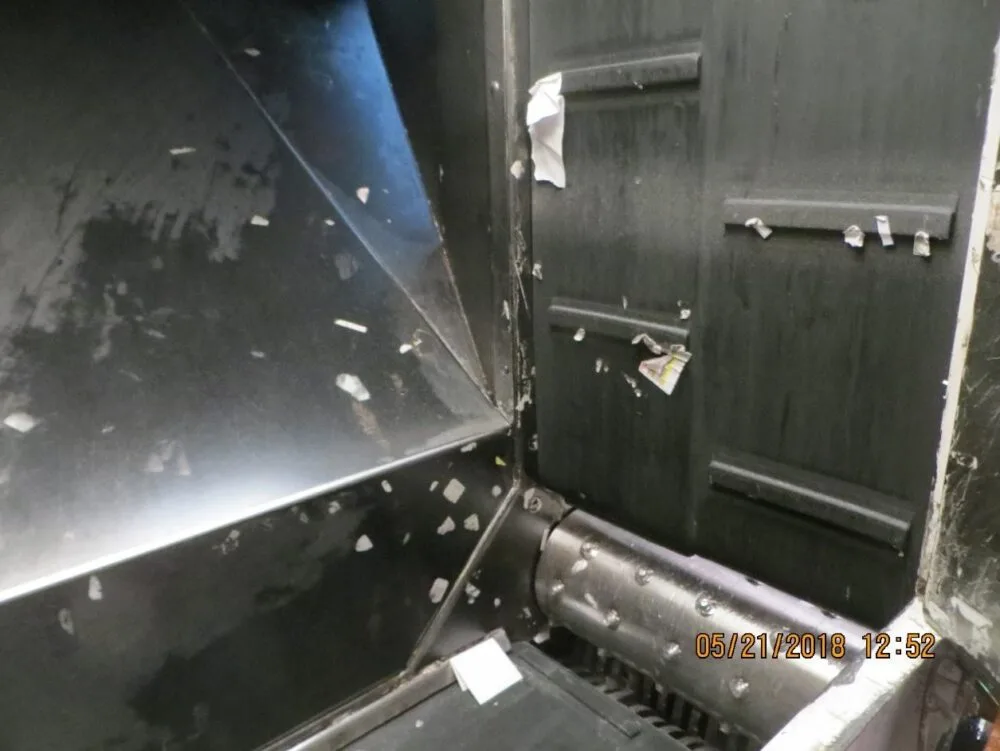
Stritmatter Law represented a 22-year-old man employed as a mobile shredding truck driver who had all four fingers on his right hand amputated while attempting to clear a jam in a shredder. The operator believed the shredder was de-energized — he had opened the door to the shredder bay and removed a pin, and believed an interlock would cut power when the door was open. The shredder was not moving, and there was no visual or audible warning that it remained energized. When the young man clear the jam, the shredder re-energized and pulled his right hand into the shredder up to his first knuckles, amputating all four fingers. Stritmatter Law brought a product liability case against the manufacturer of the shredder truck.
Together, Layman Law Firm and Stritmatter Law have the resources, technical knowledge, and litigation experience to take on machinery manufacturers and hold them accountable in the civil justice system. If you or someone you know has been seriously injured by workplace machinery, contact either of our firms. The window to preserve evidence and protect your legal rights is short, and the difference between workers’ compensation alone and full civil recovery can be life-changing.