

Senior Partner
Chemical tank and piping systems at industrial plants contain extremely hazardous and high-temperature chemical solutions. Safety in the design and maintenance of chemical tank and piping systems is critical for the safety of workers.
Nippon Dynawave Explosion and the Rights of Washington Workers
The horrific chemical tank rupture at the Nippon Dynawave plant in Longview, which resulted in the release of highly caustic “white liquor,” a chemical solution used to break wood chips down into pulp to make paper, and the deaths of eight workers, is the most recent example of the deadly consequences of unsafe chemical storage and processing systems.
Washington’s Product Liability Act (WPLA) imposes a duty on product manufacturers to provide products that are “reasonably safe as designed.” RCW 7.72.030(1). Importantly, Washington courts have held that product manufacturers may not delegate this duty to a worker’s employer.
Federal and state occupational safety laws and product design standards require that chemical storage systems have adequate means of controlling the release of potentially hazardous energy, such as valves in piping systems.
Prior Chemical Plant Death in Washington
In July 2012, 64-year-old Javier Puente, a maintenance mechanic at an aluminum foil processing plant in Moses Lake, died after being burned over 80% of his body by hundreds of gallons of approximately 180-degree boric acid solution that burst out of a piping system as he was trying to remove a pump for maintenance. Workers believed that the system was fully drained of boric acid solution, but hot boric acid solution remained, undetectable, in the system. There was no valve in the pipeline to isolate the pump from any residual chemical solution in the system when the pump needed to be removed. Following the incident, the employer added two isolation valves to the piping before and after the pump so that the pump could be isolated from any residual solution in the system when the pump needed to be removed.
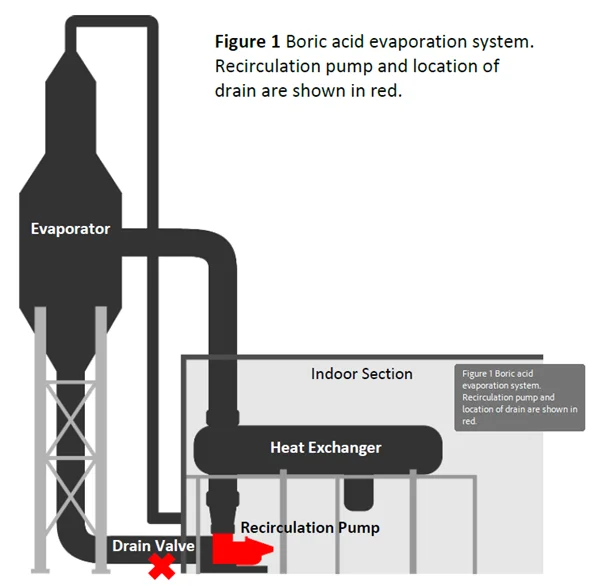
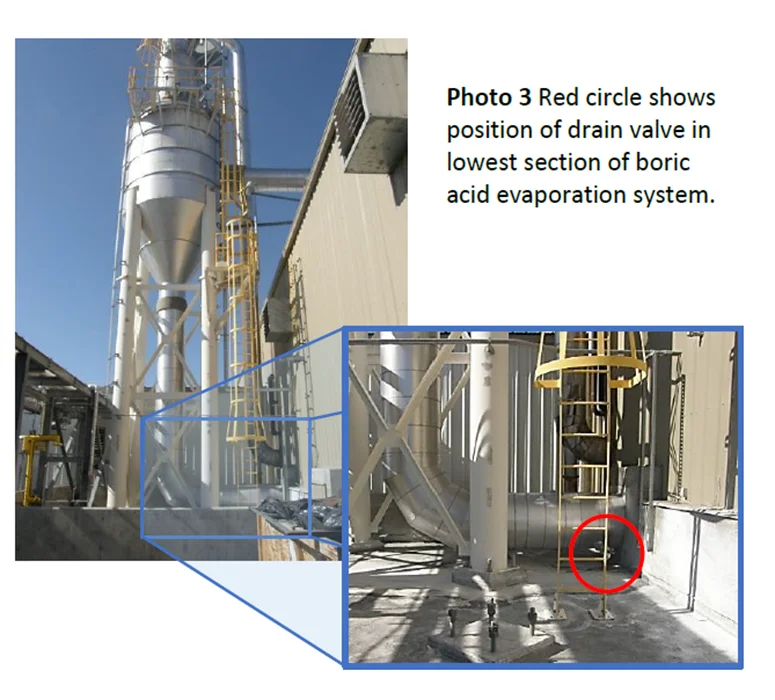
Stritmatter Law and Calbom & Schwab represented the family of Javier Puente in a lawsuit against the manufacturer of the boric acid evaporator system. Among other defenses, the manufacturer of the system claimed that the system was not a “product” but instead an “improvement upon real property” subject to a six-year “construction statute of repose” under Washington law, and that therefore, no claims could be brought relating to the design of the system because it was installed in 2002, more than six years before the July 2012 incident.
A King County Superior Court judge accepted the manufacturer’s argument and dismissed the Puente family’s claims. Stritmatter Law appealed the decision and obtained a reversal in the Court of Appeals, which held that the chemical conveyance and storage system was part of the manufacturing process taking place within an “improvement to real property” and therefore subject to Washington’s Product Liability Act.
Stritmatter Law contended that the system should have been designed to include a “double block and bleed” valve system that would allow a means of isolating the pipeline when it needed to be opened (a “line break”) such as to remove a pump for maintenance, and that there should have been a means provided to verify that no hot liquid remained near the line break location, such as appropriately located temperature gauges.
Prior Washington Workplace Accidents Related to Chemical Plants
Previously, Stritmatter Law represented two contractors who were performing maintenance on a chemical storage tank at a facility when the seal on the tank, which had not been properly maintained, released sulfuric acid, causing permanent lung damage and respiratory injuries. Stritmatter Law filed a lawsuit on behalf of the workers and their families against the plant operator for failing to maintain the tank properly.
The attorneys at Stritmatter Law have extensive experience representing workers who have been injured or killed as a result of unsafe conditions at industrial plants. If you or a loved one have been injured because of a dangerous chemical storage or processing system or other unsafe industrial plant conditions, call Stritmatter Law for a free consultation with one of our experienced product liability and industrial safety lawyers.